The Risk at Waste Transfer Stations: What Fleet Operators Need to Know
Why waste transfer stations are high-risk environments
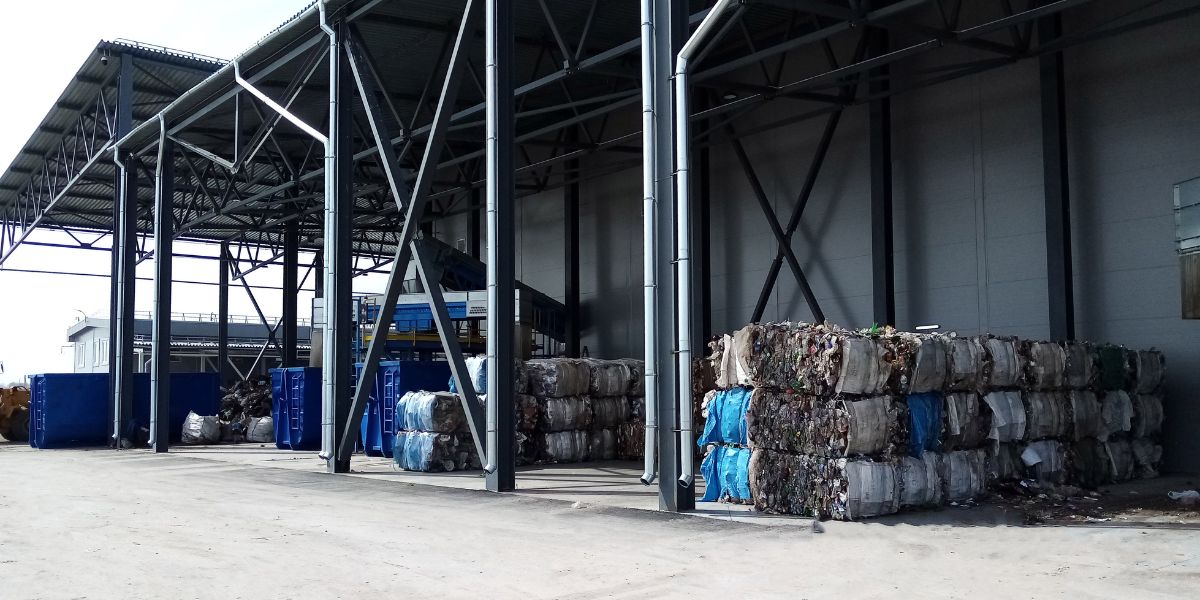
A waste transfer station is not simply a place where waste arrives and leaves. It is a working environment with constant movement, changing conditions and multiple overlapping activities.
Common pressure points include:
- Large vehicles moving through limited space
- Frequent reversing and turning
- Pedestrians working near vehicle routes
- Tipping, loading and shovelling activity
- Restricted sight lines caused by waste piles, structures or other vehicles
- Noise, dust and changing ground conditions
- Pressure to maintain throughput across the site
On waste and recycling sites, transport risk is closely tied to layout, visibility and the interaction between people, vehicles and plant.Where those factors are poorly controlled, familiar tasks can quickly become high-risk ones. That is especially true in environments where space is limited,and multiple activities are happening at once.
That matters because many of the most serious incidents at transfer stations do not come from unusual events. They come from ordinary movements in a complex setting. A vehicle reverses. A worker crosses behind it.A driver’s view is partially blocked. A loader steps into an area that seemed clear seconds earlier. These are predictable risk patterns, which means they can be addressed more effectively when the site is reviewed through a transport and visibility lens.
The main risks at waste transfer stations
Reversing and rear blind spot risk
Reversing remains one of the clearest danger areas on waste sites. The reason is simple. It combines restricted visibility, close-proximity working and limited reaction time.
On a transfer station, reversing often happens around:
- Bays and unloading points
- Plant activity zones
- Congested yard areas
- Access and exit routes
- Temporary layout changes or obstructions
This is one of the areas where site design and vehicle technology need to work together. Space, routing and process all matter, but so does the driver’s ability to detect hazards quickly when visibility is limited.
Fleetclear’s Reverse Radar is designed to monitor the rear blind spot during reversing manoeuvres, detect ahigh number of stationary or moving targets, provide a wide field of view and support configurable detection zones. Optional automatic braking adds another layer of intervention where risk is highest.
For transfer stations, that matters because the issue is not just rear visibility in general. It is rear visibility in an environment where workers, vehicles and plant may all be moving at once.
Restricted visibility around large vehicles
Risk at waste transfer stations is not limited to the area directly behind the vehicle. Large commercial vehicles create blind spots to the side, close to the cab and around the wider body of the vehicle. In a busy site environment, those visibility gaps can become serious exposure points.
Mirrors remain important, but they do not remove the limitations created by:
- Vehicle size
- Changing site layout
- Poor lighting or weather
- Waste stacks and fixed structures
- Close-proximity working near the vehicle
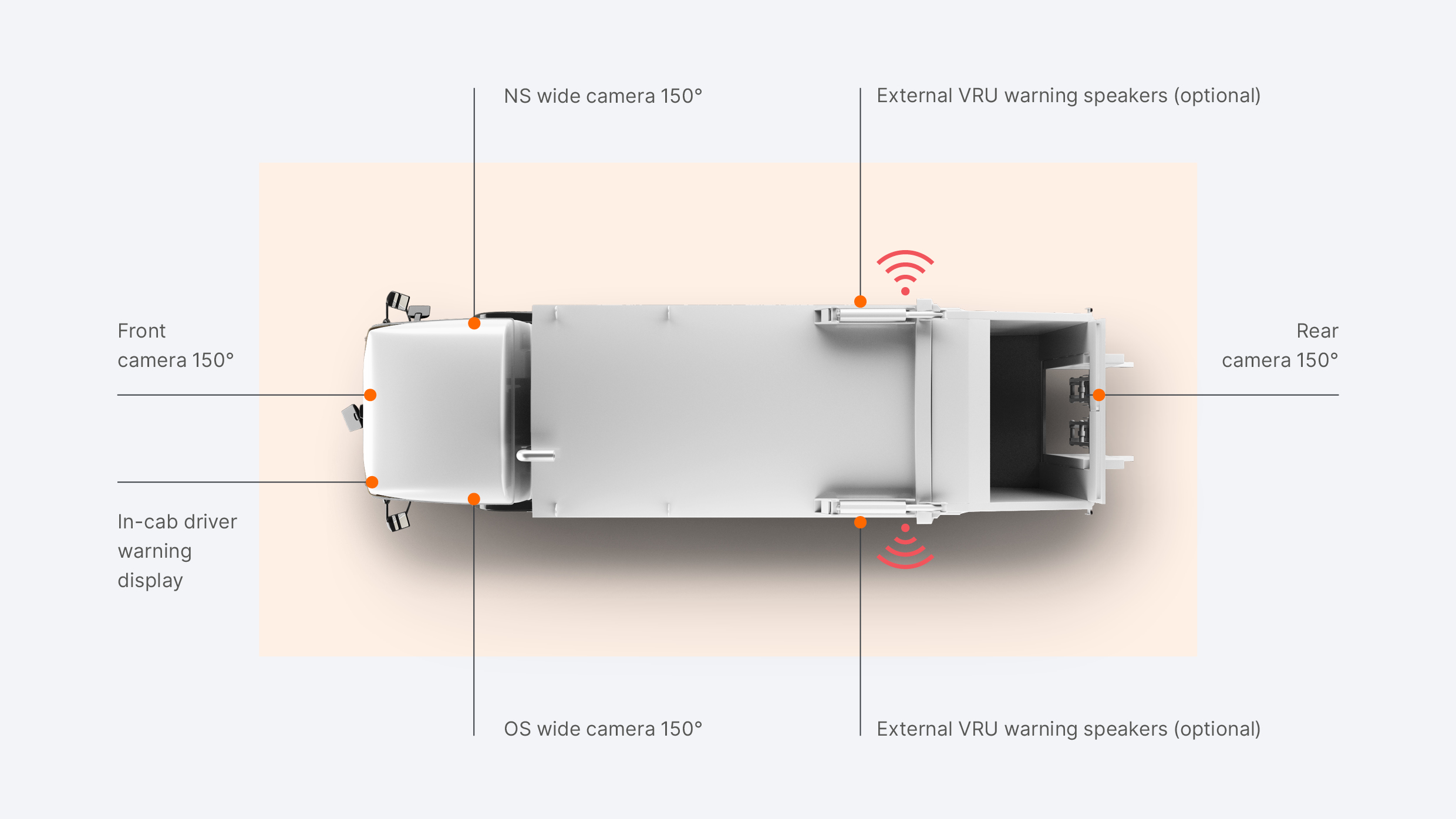
This is where Fleetclear’s 360 Information System and BSIS fits naturally into the discussion. At a general level, it is designed to help drivers and operators see most of the way around large vehicles using camera coverage and AI support. In practical terms, that means stronger all-round awareness, better visibility in manoeuvring areas and a reduced chance of missed hazards around the vehicle.
Pedestrian and operative exposure
One of the biggest mistakes in transfer-station risk management is to think only about the driver. Some of the highest-risk moments involve people outside the cab.
This includes:
- Workers walking across vehicle routes
- Operatives moving around unloading points
- Supervisors or visitors entering active areas
- Staff working near the rear or side of vehicles
- People exposed while carrying out routine site tasks
Transport risk on waste sites is rarely just a vehicle issue. It is a movement issue. The point where people and vehicles share the same working space is where exposure rises quickly.
Exposure to adjacent vehicle movement
Not every site risk comes from the vehicle a worker is standing next to. Sometimes the greater danger comes from nearby vehicle movement that the operative does not see in time.
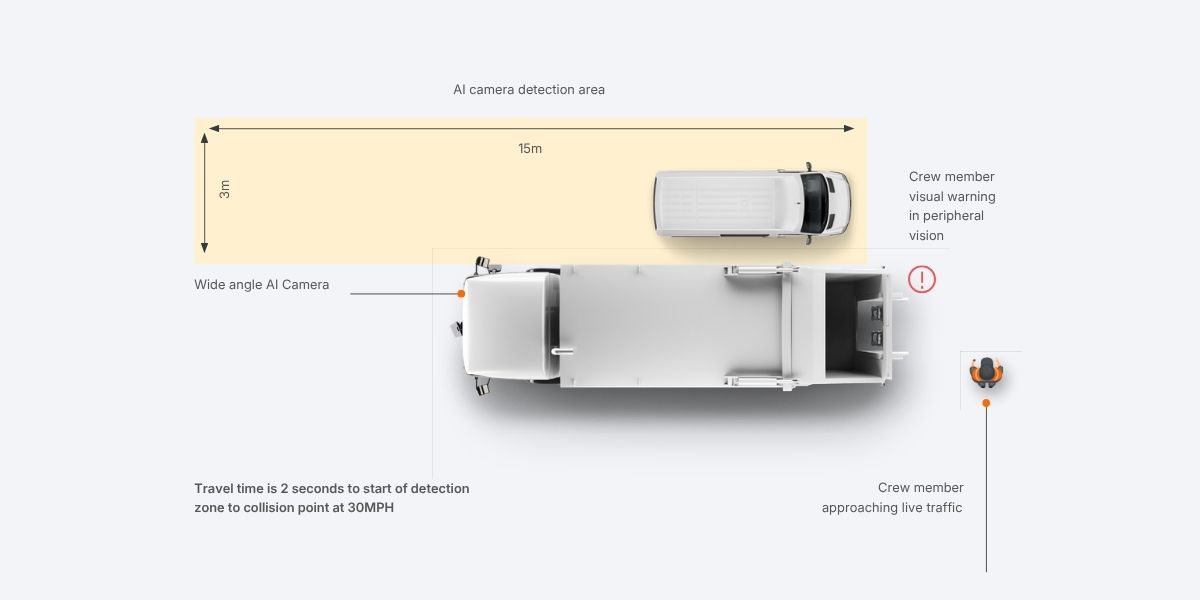
Fleetclear’s Live Lane Information System offers a useful way of thinking about that problem.It is designed to warn operators working at the rear of the vehicle when another vehicle is approaching in the adjacent live area. The product sheet notes long-range detection up to 30 metres, rear warning lights, smart filtering and configurable detection zones. The diagram also shows how quickly a vehicle can move from detection point to collision point, with only around two seconds at 30 mph.
At a waste transfer station, the exact layout may differ,but the risk logic is similar. Workers can become exposed to moving vehicles from outside their immediate focus area. That is why warning systems that communicate danger early can make such a practical difference.
Limited evidence after incidents and near misses
Risk management is weaker when operators cannot see clearly what actually happened.
Without reliable footage or event data, common problems include:
- Near misses going unreviewed
- Uncertainty around driver actions
- Limited visibility of unsafe behaviours
- Poor learning after incidents
- Disputes over cause and responsibility
Fleetclear’s DVR systems are useful in this context because they are positioned not only as evidence tools, but as part of wider driver behaviour monitoring, safety review and operational oversight. The product material highlights incident evidence,service complaint handling, false claim defence, live connectivity and support for different vehicle types.
For waste transfer stations, DVR matters because risk does not improve through assumptions. It improves when teams can review what took place and identify patterns before the next event.
Why transfer-station risks are often underestimated
One reason these risks persist is familiarity. The work is repeated every day, which can make hazardous interactions feel normal. Overtime, teams can become used to working around reversing vehicles, partial visibility and close-proximity movements.
Other common reasons include:
- Site risk being treated as separate from fleet risk
- Responsibility split across transport, site and H&S teams
- Near misses not being captured properly
- Controls not being updated as layouts or workflows change
- Overreliance on driver judgement in fast-moving situations
This is where a risk-management approach matters. Thequestion is not only whether controls exist. It is whether they reflect how the site operates on a busy day.
What effective control looks like
Better control at a waste transfer station usually comes from combining site measures with vehicle-based technology.
That includes:
- Clearer separation between pedestrians and vehicles
- Safer vehicle routes and crossing points
- Reduced need for reversing where possible
- Better all-round visibility around larger vehicles
- Earlier warnings for drivers and operatives
- Stronger control around danger zones
- Reliable footage and event review after incidents or near misses
- Connected data that supports ongoing improvement
This is also consistent with wider industry guidance on waste-site transport safety, which places strong emphasis on layout, segregation, visibility and proper control of vehicle movement. The principle is straightforward: safer movement depends on safer systems, not just more vigilance.
Fleetclear Connect supports that broader picture by bringing together vehicle safety technology, tracking, telematics, event reconstruction, live streaming, reporting and maintenance visibility in one platform.
That joined-up view matters because site risk does not sit neatly in one category. Visibility, movement, behaviour and evidence alloverlap.

How Fleetclear technology helps mitigate waste transfer-station risk
When viewed through the lens of risk control, each product supports a different part of the problem.
Improving all-round visibility
- Fleetclear’s 360 Information System helps drivers see most of the way around large vehicles using cameras and AI support.
Protecting high-risk movement areas
- LLIS helps warn workers about approaching vehicle danger in adjacent movement areas.
- Reverse Radar strengthens rear blind spot control during reversing.
Supporting review and learning
- DVR provides footage, context and a stronger basis for incident investigation and behavioural review.
Connecting safety into wider operations
- Fleetclear Connect helps bring together the data, alerts and evidence that support better operational visibility.
Common mistakes operators make
When assessing waste transfer-station risk, common mistakes include:
- Relying too heavily on experience and manual observation
- Underestimating blind spots around larger vehicles
- Treating safety devices as isolated products rather than connected controls
- Failing to review near misses properly
- Not adapting controls when site conditions change
Final thought
The risk at waste transfer stations is not abstract. It isoperational, visible and often familiar. That is exactly why it needs to be actively addressed.
The strongest operators do not wait for a serious incident to reveal weak points. They review how vehicles move, where visibility is lost,where workers are exposed and where warnings or evidence are lacking. Then they use the right combination of fleet technology to strengthen control.
Looking to reduce risks within your operation? Contact us today for a free demo of our solutions.
Drive your business forward with Fleetclear.
Contact our team to book a demo and start your journey towards a safer, more efficient and compliant fleet.